
Feeding a family with a baby, toddler, and adult can feel like cooking three separate meals every night—but it doesn’t have to be this way. You can prepare one base recipe and adapt it into three textures that suit each stage: smooth or mashed for the baby, soft finger‑friendly pieces for the toddler, and the “adult” version for you.
This approach saves time, reduces food waste, and supports healthy family eating habits. Below are five complete, balanced family‑style meals, each with clear instructions for how to serve baby, toddler, and adult plates from the same pot.
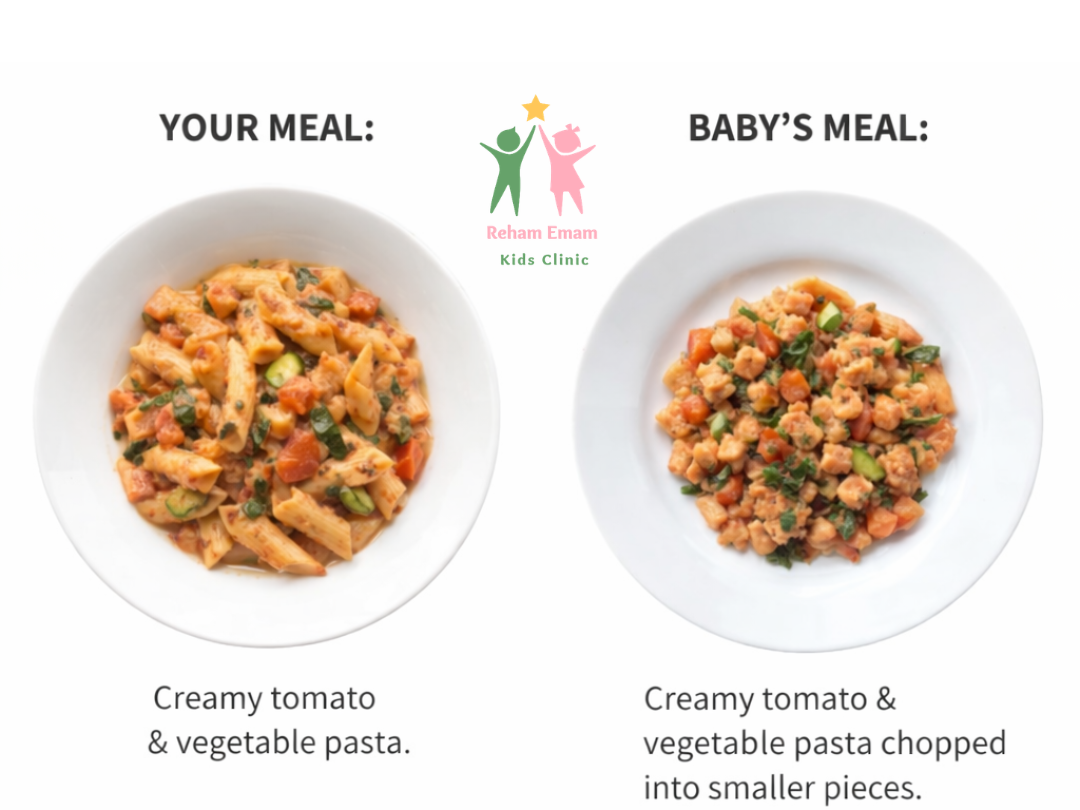
1. Creamy Tomato & Vegetable Pasta
This one‑pot pasta is a perfect weeknight family meal. It’s rich in vegetables, provides protein, and can be adapted from a smooth puree to chunky bites.
Base ingredients (4–6 portions):
- 200 g whole‑grain or regular pasta
- 1 onion, finely chopped
- 2 garlic cloves, minced
- 1 courgette (zucchini), finely diced
- 1 carrot, grated
- 400 g canned chopped tomatoes
- 2–3 tbsp tomato purée
- 200 ml low‑sodium vegetable or chicken stock
- 100 g cooked lentils or minced chicken (optional)
- 1 tbsp olive oil
- Fresh herbs (basil or parsley), optional
Cooking method:
- Cook pasta in salt‑free water until soft.
- In a pan, sauté onion and garlic in olive oil until soft.
- Add grated carrot and courgette; cook 3–4 minutes until slightly softened.
- Stir in tomatoes, tomato purée, stock, and lentils or minced meat. Simmer 10–12 minutes until vegetables are tender and sauce is thickened.
- Toss with cooked pasta and stir well.
How to serve 3 textures from the same pot
Baby plate (6–9 months / smooth):
- Blend a portion of the pasta and sauce with a little cooking water or breast milk until smooth.
- Adjust thickness to a puree or slightly thicker mash depending on your baby’s stage.
- Ensure no large lumps or hard pieces remain.
Toddler plate (10–24 months / soft finger‑friendly):
- Mash a portion slightly with a fork or cut pasta into small pieces.
- Serve with a side of soft vegetable sticks (carrot, courgette) for self‑feeding.
- Keep the sauce slightly thicker for easier scooping with a spoon.
Adult plate (full texture):
- Serve as a complete pasta dish with a sprinkle of herbs and optional grated cheese on the side.
Nutrition notes:
- Carbohydrates (pasta), fiber (lentils/vegetables), iron (lentils/chicken), and vitamins A and C (carrot, courgette, tomatoes).
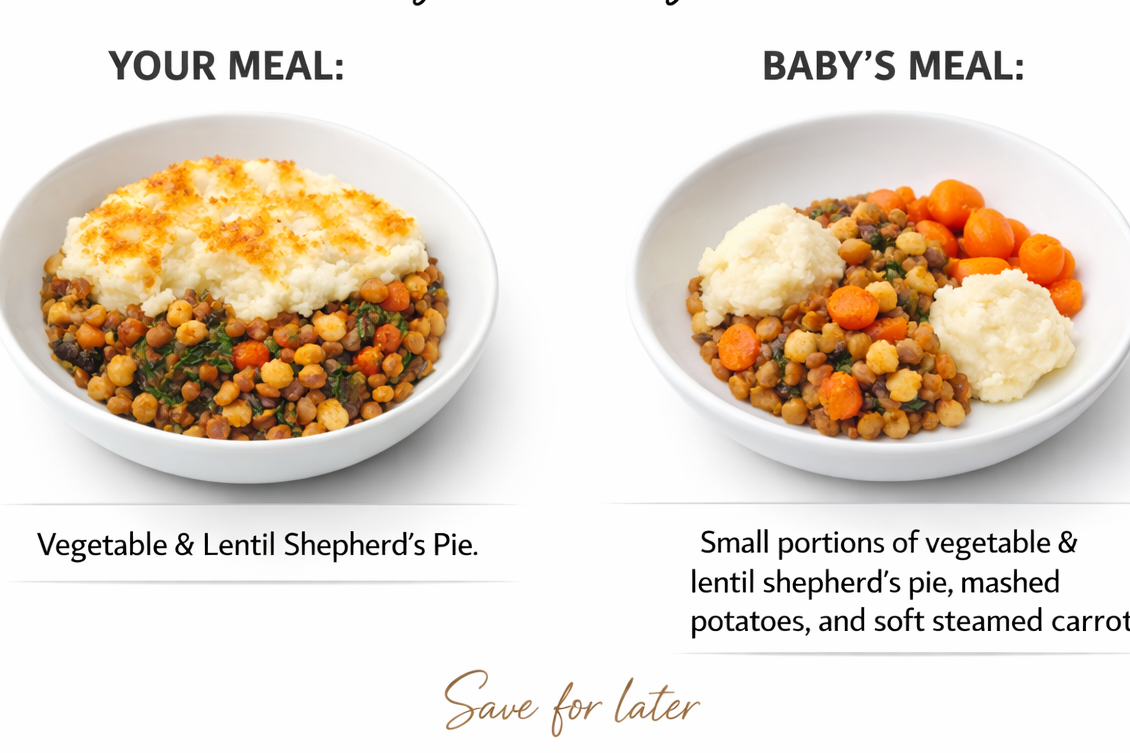
2. Vegetable & Lentil Shepherd’s Pie
A soft, comforting shepherd’s pie is ideal for baby‑led weaning and toddler‑style meals while still satisfying adults.
Base ingredients (4 portions):
- 400 g baby potatoes or regular potatoes, peeled and diced
- 1 tbsp olive oil
- 1 onion, finely chopped
- 1 carrot, grated
- 1 courgette, grated
- 400 g canned chopped tomatoes
- 200 g cooked lentils or minced beef or chicken
- 1 tsp dried thyme or mixed herbs
- 100 ml low‑sodium stock
- 50 g grated cheese (optional, for adults and toddlers over 12 months)
Cooking method:
- Boil potatoes until very soft. Drain and mash with a little olive oil or breast milk/formula for the baby version.
- In a pan, sauté onion until soft. Add grated carrot and courgette; cook 3–4 minutes.
- Stir in lentils/meat, tomatoes, herbs, and stock. Simmer until sauce is thick and vegetables are tender.
- Transfer mixture to an ovenproof dish, top with mashed potato, and bake at 180°C/350°F for 20–25 minutes until golden.
Three‑texture serving
Baby plate:
- Mash a small portion of filling until very smooth.
- Top with a thin layer of very soft potato mash.
- Serve at lukewarm temperature in small portions.
Toddler plate:
- Serve a small portion with chunky mashed potato and slightly chunkier filling.
- Allow toddler to scoop with a spoon or pick up soft potato pieces.
Adult plate:
- Serve as a full shepherd’s pie with a spoonful of cheese on top if desired.
Nutrition notes:
- Protein and iron (lentils or meat), complex carbs (potatoes), fiber, and vitamins A and C (carrot, courgette).
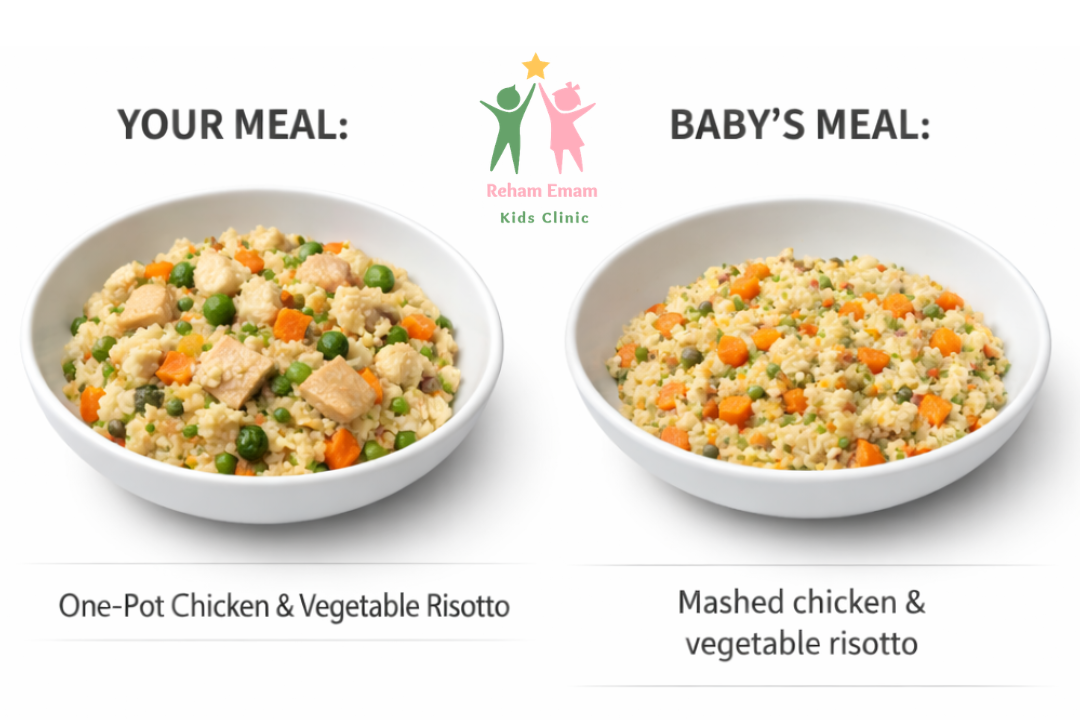
3. One‑Pot Chicken & Vegetable Risotto
Risotto is naturally creamy and can be adapted from a smooth baby‑friendly porridge to a more textured toddler and adult dish.
Base ingredients (4 portions):
- 150 g arborio or short‑grain rice
- 1 onion, finely chopped
- 1 garlic clove, minced
- 200 g chicken breast, diced
- 1 courgette, grated
- 1 carrot, grated
- 400 ml low‑sodium chicken or vegetable stock
- 1 tbsp olive oil
- Small handful of peas (optional)
Cooking method:
- In a large pan, sauté onion and garlic in olive oil until soft.
- Add diced chicken and cook until lightly browned.
- Stir in rice, grated carrot, courgette, and a ladle of stock.
- Keep adding stock little by little while stirring until rice is soft and creamy (about 15–18 minutes).
- Stir in peas at the end until just cooked.
Three‑texture serving
Baby plate:
- Blend a small portion of risotto with extra stock or water until very smooth.
- Thin to a porridge‑like consistency suitable for your baby’s stage.
Toddler plate:
- Serve a normal portion with visible soft vegetables and small pieces of chicken.
- Encourage self‑feeding with a spoon or soft fingers.
Adult plate:
- Serve as a full risotto with a drizzle of olive oil and a side of salad if desired.
Nutrition notes:
- Protein (chicken), complex carbs (rice), fiber (vegetables), and vitamins A and C (carrot, courgette, peas).
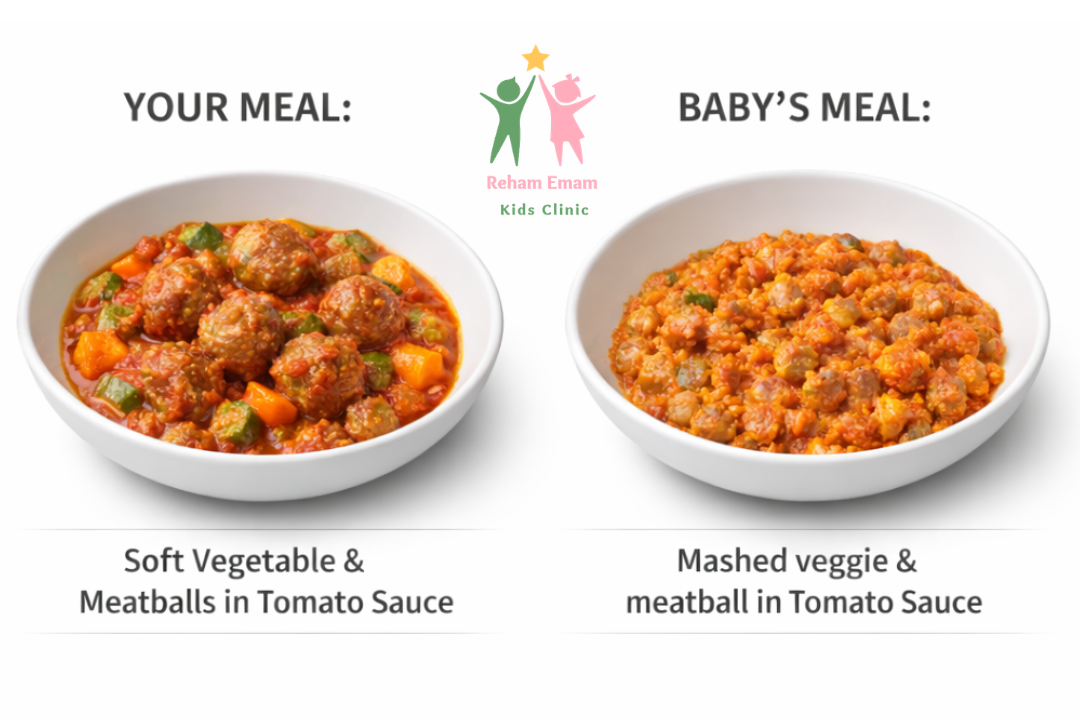
4. Soft Vegetable & Meatballs in Tomato Sauce
Soft meatballs in a rich tomato sauce are easy to adapt for different textures and perfect for baby‑led weaning.
Base ingredients (4 portions):
- 300 g lean minced beef or chicken
- 1 small onion, finely grated
- 1 egg (or 1 extra egg yolk for baby)
- 50 g breadcrumbs or cooked oats (no added sugar)
- 1 tbsp olive oil
- 400 g canned chopped tomatoes
- 1 grated carrot
- 50–100 ml low‑sodium stock
Cooking method:
- In a bowl, mix mince, grated onion, egg, and breadcrumbs until combined.
- Form into small, soft balls and cook in a pan with a little olive oil until browned.
- Remove from pan, sauté grated carrot in the same pan, then add tomatoes and stock.
- Simmer 10 minutes, then add meatballs and simmer 8–10 minutes until tender.
Three‑texture serving
Baby plate:
- Mash a small portion of meatballs into the sauce with a fork until very soft.
- Blend further with cooking liquid if needed to create a smooth texture.
Toddler plate:
- Serve 2–3 small meatballs with sauce and a side of soft bread or rice.
- Encourage handling and self‑feeding.
Adult plate:
- Serve as a full bowl of meatballs with sauce, rice, or pasta.
Nutrition notes:
- Protein and iron (meat), vitamins A and C (tomatoes, carrot), and fiber.
Rounding Out Your Family‑Style Approach
When planning family‑style meals, keep these principles in mind:
- Salt and sugar: Do not add salt or sugar to baby food. Adults can add seasonings to their own plates if desired.
- Texture progression: Match baby textures to their stage (smooth → mashed → soft lumps), while toddlers can handle more varied textures.
- Allergy awareness: Introduce common allergens (e.g., egg, lentils, nuts) one at a time and watch for reactions.
- Shared eating: Sit together as much as possible. Observing family eating helps infants and toddlers accept new foods more easily.
By using these five family‑style meals, you can create one base recipe each day and adapt it into three textures, saving time in the kitchen and building a lifelong culture of shared, healthy family meals.
Leave a Reply
You must be logged in to post a comment.