
Your cart is currently empty!
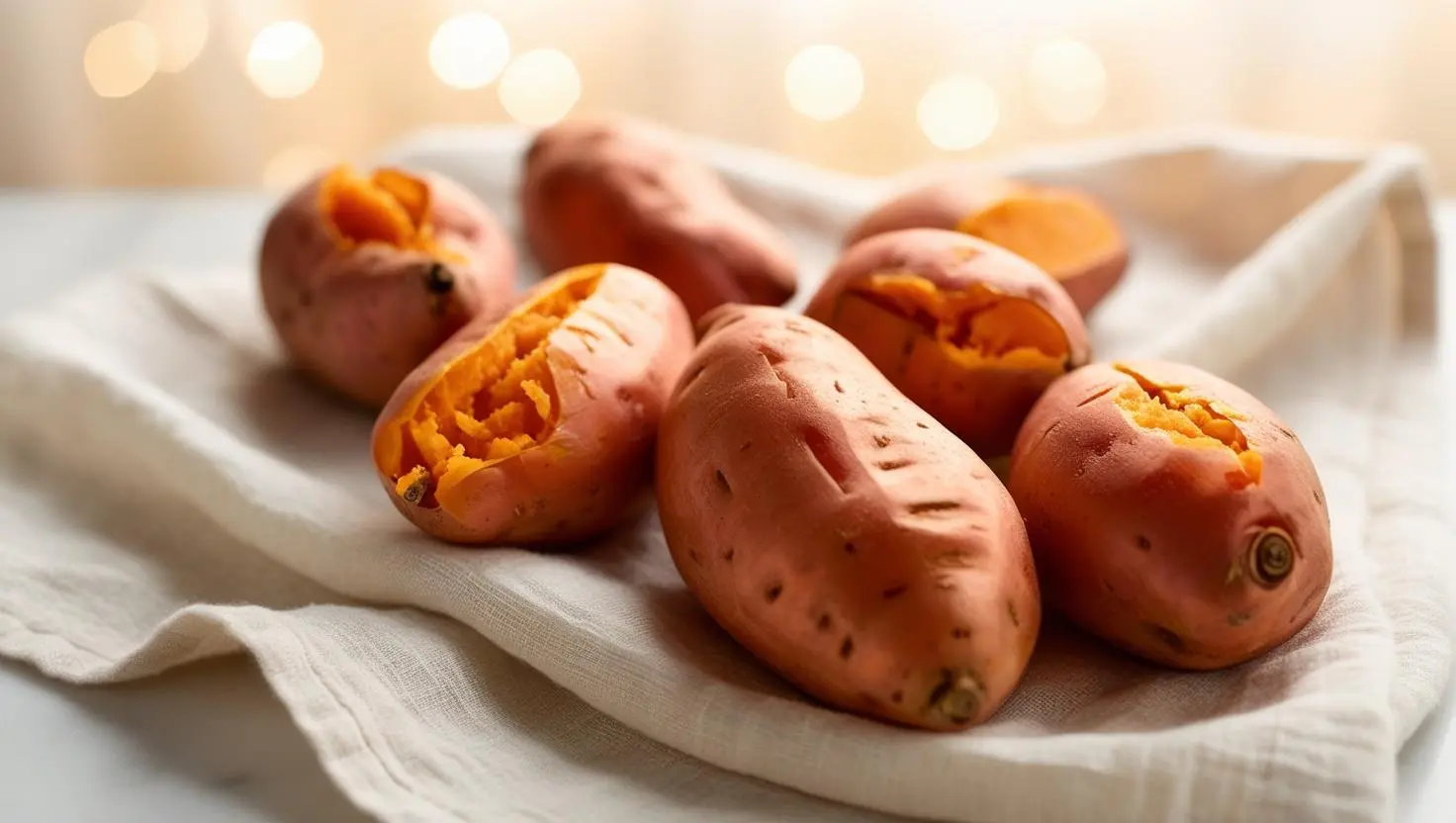
Sweet potatoes are an excellent first food, typically introduced when an infant reaches developmental readiness, which is generally around 6 months of age.
The sweet potato (also known as apichu, camote, goguma, or satsumaimo) has deep historical roots. In North America, the term “yam” is often used interchangeably with sweet potato. This nomenclature stems from the history of enslaved West Africans who noted the tuber’s resemblance to the African yam, though the two are botanically distinct
Age-Appropriate Serving Suggestions
Every child develops at their own pace. The following guidelines assist in tailoring textures to your baby’s specific motor skills.
Introducing Sweet Potatoes at 4 Months baby:
Sweet potatoes may be introduced as early as 4 months, provided the infant shows clear signs of developmental readiness. If the child is not yet ready, it is best to wait until 5 or 6 months.
Sweet Potatoes for 4-Month-Olds:
- Verify Readiness: The infant should be able to sit with support, maintain head control, and show interest in food by reaching for objects.
- Preparation: Wash and peel the sweet potato thoroughly. Dice and cook by boiling, steaming, or baking until completely tender.
- Achieving the Right Consistency: Mash the cooked potato into a very smooth puree. Incorporate breast milk or formula to thin the consistency, ensuring there are no lumps to prevent choking.
- Initial Serving: Start with a very small amount, typically half to one teaspoon.
- Observation: Monitor for any adverse reactions. It is common for infants to reject a new flavor initially; consistency is key, and it may take several attempts for them to accept the taste.
- Diversification: Once the sweet potato is tolerated well, you may gradually introduce other pureed fruits and vegetables to expand their palate
| Age | Serving Style | Developmental Focus |
| 6 Months+ | Large, soft-cooked wedges (skin on or off) or smooth mashes. | Palmar Grasp: Allowing the baby to hold and munch on large pieces. |
| 9 Months+ | Bite-sized pieces of soft-cooked sweet potato. | Pincer Grasp: Encouraging the use of the thumb and forefinger. |
| 12 Months+ | Bite-sized pieces or wedges; introduce a fork. | Utensil Proficiency: Developing hand-eye coordination with tools. |
Tip: When introducing utensils, “pre-load” a spoon or fork and place it near the child. This allows them to practice the motion of bringing the tool to their mouth independently.
Safety and Allergy Information
Choking Risk
Cooked, soft sweet potatoes are considered a low-risk food for choking risk when prepared appropriately for the child’s age. To ensure safety:
- Always supervise mealtime within arm’s reach.
- Ensure the texture is soft enough to be mashed between your fingers.
- Avoid serving raw or undercooked sweet potatoes.
Allergies and Sensitivities
While sweet potatoes are not among the most common allergens, two specific conditions are worth noting:
- Oral Allergy Syndrome: This condition may cause mild itching in the mouth; cooking the offending vegetable usually neutralizes this reaction.
- FPIES (Food Protein-Induced Enterocolitis Syndrome): A delayed immune reaction that can cause repetitive vomiting or diarrhea 1–4 hours after ingestion. While rare, it requires medical management.
Heavy Metals
Like many root vegetables, sweet potatoes can contain trace amounts of environmental contaminants, such as lead or arsenic. Health experts agree that these should not be avoided, but rather served as part of a varied diet to minimize cumulative exposure.
Nutritional Profile & Benefits:
Sweet potatoes are a nutrient-dense “superfood” for growing infants, providing:
- Vitamin A (Beta-carotene): For vision and immune health.
- Fiber: To support a healthy gut microbiome.
- Potassium & Zinc: Crucial for metabolic function and growth.
- Vitamin C: Enhances the absorption of iron from other foods.
Is Your Baby Ready?
Before starting solids, ensure your baby meets these milestones:
- Sits with minimal support and maintains good head control.
- Reaches for objects and brings them to their mouth accurately.
- Demonstrates active interest in your food during mealtimes.
Other ways to introduce Sweet Potatoes for your little one
Sweet potatoes are a nutritional powerhouse, but they are not inherently high in iron. However, their high Vitamin C content significantly enhances the absorption of “non-heme” iron (iron from plant-based sources).
To maximize the nutritional benefit, here are three simple, professional-grade recipes that pair sweet potato with iron-rich ingredients.
1. Golden Red Lentil & Sweet Potato puree or mash
Lentils are an excellent plant-based source of iron and protein. When combined with the Vitamin C in sweet potatoes, the iron becomes much easier for your baby to absorb.
- Ingredients: 1 small sweet potato (peeled/diced), 1/4 cup red lentils (rinsed), 1 cup water.
- Method:
- Place sweet potato, lentils, and water in a saucepan.
- Bring to a boil, then simmer for 15–20 minutes until tender.
- To Serve: Mash with a fork for older babies or blend into a smooth puree for beginners.
- Nutritional Perk: Provides a complete protein and a significant iron boost.
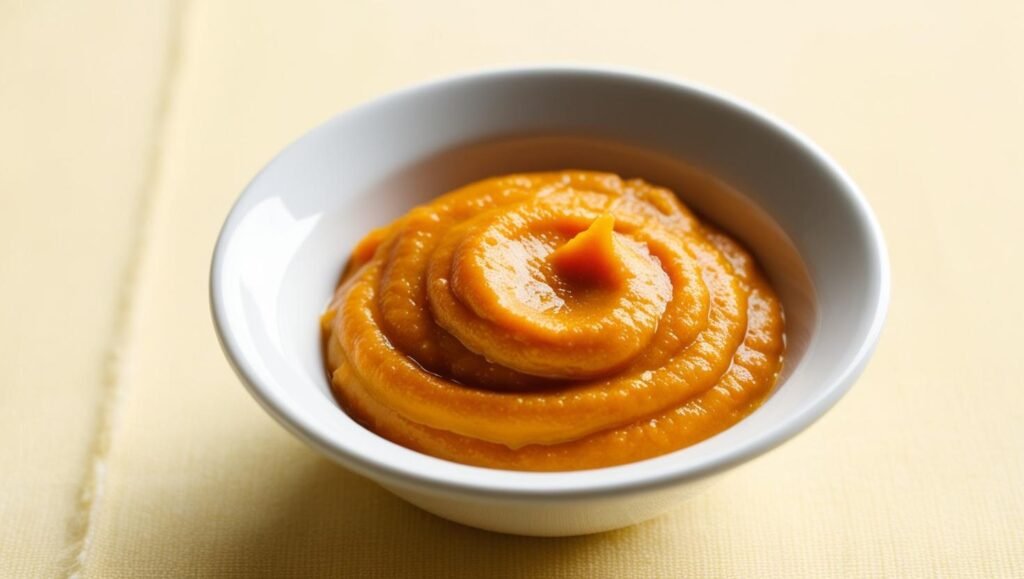
2. Sweet Potato & Spinach “Green Boost” Puree
Spinach is famous for its iron, and sweet potato masks its slightly bitter, earthy flavor, making it more palatable for new eaters.
- Ingredients: 1 medium sweet potato, 1 cup fresh spinach leaves.
- Method:
- Steam or bake the sweet potato until soft.
- During the last 2 minutes of steaming (or while the potato is hot), wilt the spinach.
- Blend the two with a splash of breast milk, formula, or water.
- Nutritional Perk: High in both Vitamin A and iron.
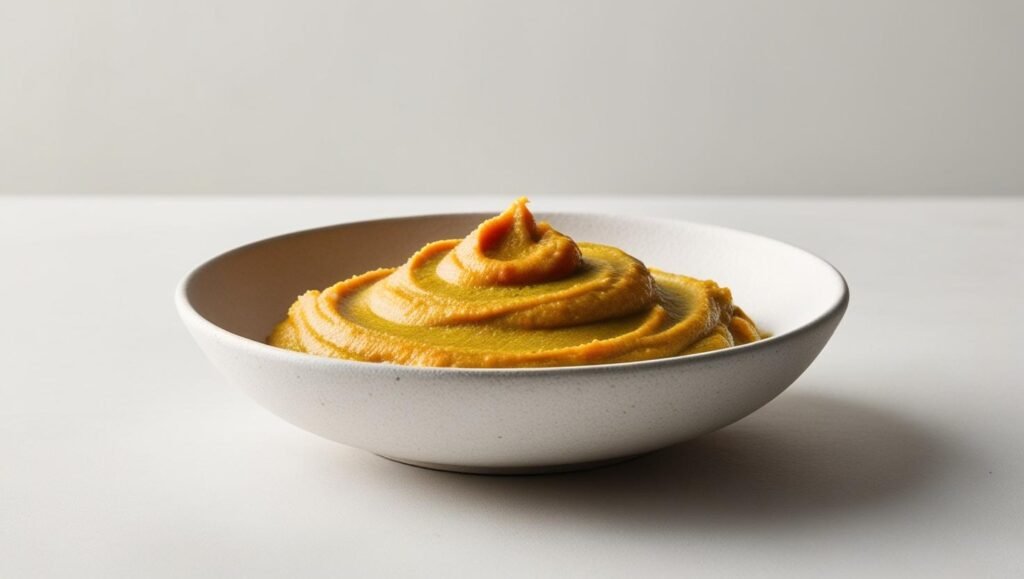
3. Iron-Fortified Sweet Potato Oatmeal
If you are using iron-fortified infant cereals, sweet potato is the perfect natural sweetener to mix in.
- Ingredients:1/2 cup cooked, mashed sweet potato, 1/4 cup iron-fortified baby oatmeal.
- Method:
- Prepare the oatmeal according to the package instructions using warm breast milk or formula.
- Stir in the mashed sweet potato until fully incorporated.
- Add a pinch of cinnamon for extra flavor and aromatic development.
- Nutritional Perk: Fortified cereals are the most reliable way to ensure infants hit their daily iron targets (11mg/day for 7–12 months).
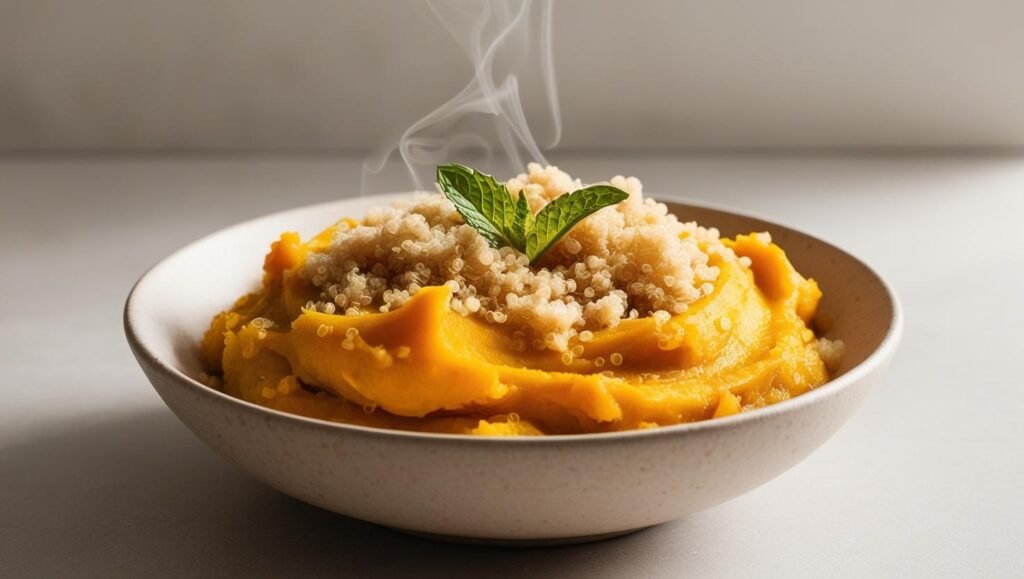
Want more science-backed, stage-by-stage guidance?
Our book “200 Delicious Meals for Babies Under One” is a Pediatrician’s Guide to First Foods & Beyond, which breaks down:
✅ Age-by-age meal plans (4–12+ months)
✅ Nutrient priorities at each stage
✅ Allergy introduction timelines
✅ Recipes that boost development
✅ How to balance solids with breastmilk/formula
Leave a Reply
You must be logged in to post a comment.