
Your cart is currently empty!

Congratulations on the birth of your new baby.
The motherhood journey is filled with challenges and surprises, and feeding your newborn through breastfeeding is one of these meaningful experiences.
In this article, we will review the American Academy of Pediatrics (AAP) recommendations regarding breastfeeding duration in minutes, signs of infant satiety, signs of infant hunger, and how you can meet your baby’s needs with ease and comfort. We will also discuss the most important methods for establishing milk supply after cesarean delivery.
Benefits of Breastfeeding for Mothers
Benefits of breast Breastfeeding are numerous for mothers(health and emotional benefits). Here are some key advantages:
1. Enhanced Emotional Bonding: Breastfeeding helps strengthen the emotional connection between mother and child. A strong and intimate bond develops during the feeding process, while the mother also provides warmth and security to the baby during this time.
2. Maternal Health Protection: Breastfeeding helps protect maternal health by reducing the risk of cardiovascular disease, breast cancer, and ovarian cancer.
3. Enhanced Postpartum Recovery: Breastfeeding promotes faster recovery after childbirth. The release of hormones during nursing helps the uterus return to its normal size more quickly, reducing postpartum bleeding and helping the body recover naturally.
4. Convenience and Availability: Breastfeeding is easy and available anytime, anywhere. There is no need for preparation, sterilization concerns, or food preparation. Mothers can meet their baby’s needs easily and quickly.
5. Financial Savings: Breastfeeding eliminates the costs of formula, bottles, and sterilization equipment, allowing mothers to save money.
It’s important to note that every woman and child is unique, and some mothers may face breastfeeding challenges. If you encounter difficulties, we recommend speaking with a lactation consultant or pediatrician for appropriate support and guidance.
Benefits of Breastfeeding for Infants
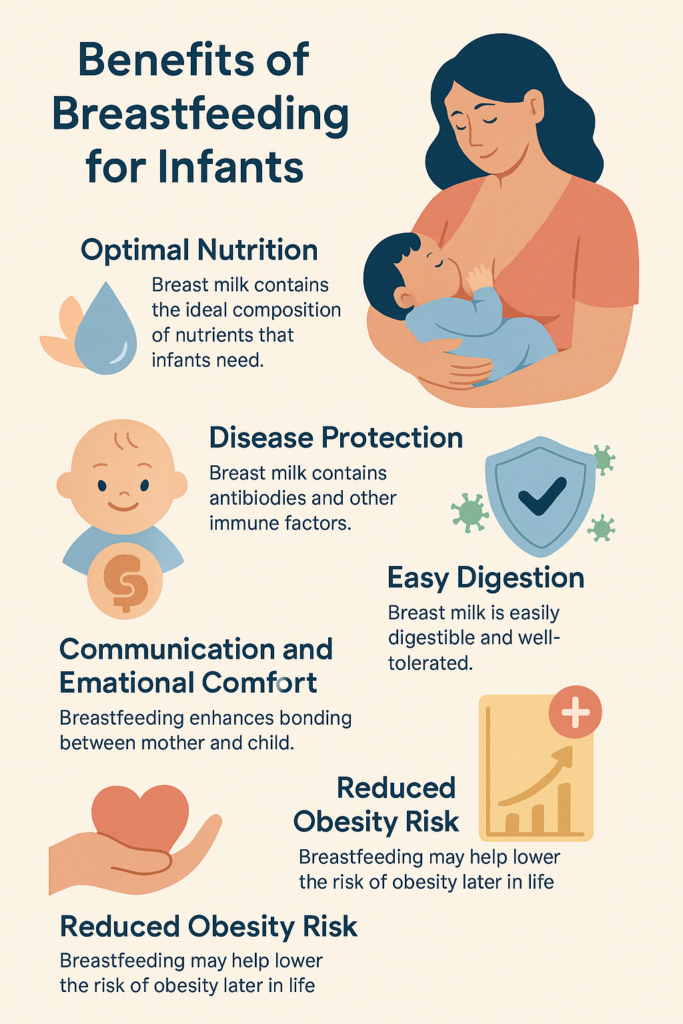
Scientific research has demonstrated that breastfeeding during the first months of a baby’s life offers numerous health benefits. According to the American Academy of Pediatrics (AAP) recommendations, exclusive breastfeeding is advised for the first 4-6 months, after which complementary foods can be gradually introduced alongside continued breastfeeding. Benefits of breastfeeding for infants include:
1. Optimal Nutrition: Breast milk contains the ideal composition of nutrients that infants need.
2. Disease Protection: Breast milk contains antibodies, anti-inflammatory substances, and other immune factors that protect babies from many infectious diseases and infections, such as diarrhea, ear infections, and upper respiratory tract infections.
3. Easy Digestion: Breast milk contains digestive enzymes and has an easily absorbable nature, making it more digestible than formula. This reduces digestive problems such as constipation, diarrhea, and bloating.
4. Communication and Emotional Comfort: Breastfeeding enhances communication and emotional bonding between mother and child. The baby feels safe, comfortable, and warm during feeding, strengthening the emotional connection between them.
5. Reduced Obesity Risk: Evidence suggests that breastfeeding may help reduce obesity risk later in life. This is believed to be due to the baby’s natural regulation of food intake based on actual need.
Breastfeeding Duration in Minutes During the First Month
First and foremost, you should know that breastfeeding should occur according to your baby’s needs and on demand. There is no fixed time for each feeding session, but here are some guidelines to help you understand breastfeeding duration in minutes during the first month.
In the first month, babies experience rapid growth and development, requiring frequent feeding. The AAP recommends feeding your baby breast milk when hunger cues appear. Typically, newborns nurse for short periods ranging from 10 to 15 minutes per session. Multiple feedings throughout the day are necessary to meet nutritional needs and ensure adequate milk intake.
Over time, breastfeeding duration increases as the baby’s stomach capacity grows and their ability to consume larger amounts of milk develops. Feeding sessions may last 15 to 20 minutes or longer, depending on the baby and their individual needs. Mothers should carefully monitor their baby’s satiety cues to ensure adequate milk intake.
It’s important to read your baby’s signals during feeding. If your baby naturally stops nursing and appears satisfied and content, this indicates they are full and the feeding is complete. Don’t try to force continued nursing if they’re not interested.
Monitoring your baby’s satiety cues is crucial to ensuring adequate milk intake. Here are some signs to watch for:
Signs of Infant Satiety
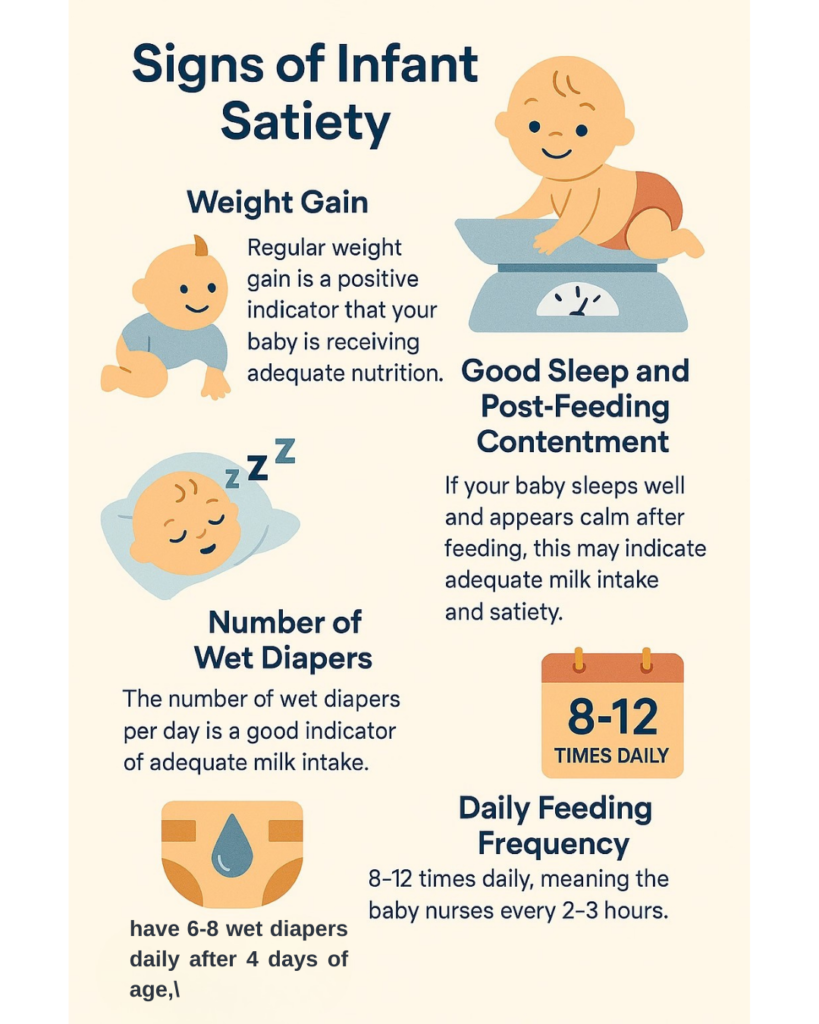
1. Weight Gain: Regular weight gain is a positive indicator that your baby is receiving adequate nutrition. You can track your baby’s weight using an infant scale and compare consecutive readings to determine healthy weight gain. This is the most important sign of infant satiety.
2. Good Sleep and Post-Feeding Contentment: If your baby sleeps well and appears calm after feeding, this may indicate adequate milk intake and satiety.
3. Number of Wet Diapers: The number of wet diapers per day is a good indicator of adequate milk intake. Typically, infants should have 6-8 wet diapers daily after 4 days of age, though during the first 4 days, only 2 wet diapers may occur.
4. Daily Feeding Frequency: 8-12 times daily, meaning the baby nurses every 2-3 hours.
It’s important to understand that infants may have different feeding and satiety patterns. Some babies may nurse for short, frequent periods, while others nurse for longer, less frequent sessions. The key is monitoring your baby’s growth pattern and ensuring appropriate weight gain, which you can track using standard infant weight charts, along with observing satiety signs.
Signs of Infant Hunger
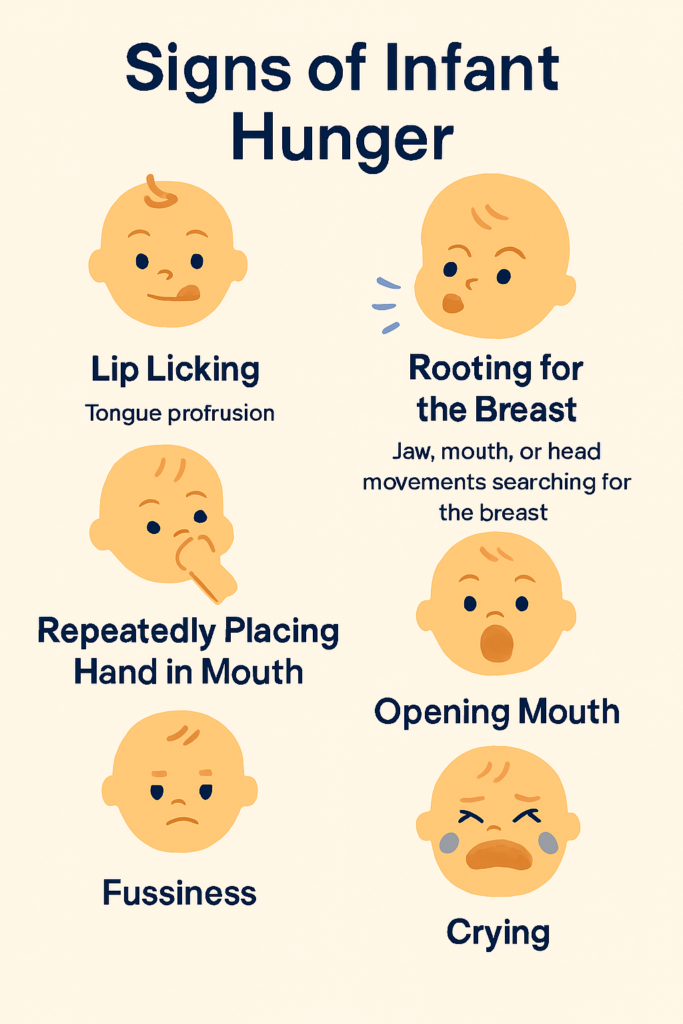
- Lip licking
- Tongue protrusion
- Rooting for the breast (jaw, mouth, or head movements searching for the breast)
- Repeatedly placing hand in mouth
- Opening mouth
- Fussiness
- Crying
Signs of Successful Breastfeeding
When it comes to breastfeeding success, several indicators suggest that nursing is going well:
1. Infant Weight Gain: If your baby is gaining weight regularly and appropriately, this is a positive sign of successful breastfeeding.
2. Adequate Urination: The amount of urine your baby produces in diapers daily is an indicator of breastfeeding success. Your baby should have clear, adequate urine output.
3. Healthy Bowel Movements: If your baby has normal stools that are soft, consistent, and painless, this indicates successful breastfeeding.
4. Infant Satisfaction and Contentment: If your baby appears satisfied and comfortable after feeding, showing signs of satiety and relaxation, this indicates successful nursing.
5. Emotional Bonding: If there is a strong emotional connection between mother and baby during breastfeeding, with mutual communication, touch, and embracing, this enhances breastfeeding success.
Tips to Enhance Breastfeeding Success
1. Good Preparation: Before your baby’s birth, prepare for breastfeeding by reviewing information and guidance about nursing. You can attend educational courses or watch instructional videos.
2. Family Support: Having someone you can rely on to help understand the breastfeeding process and provide necessary advice can be invaluable.
3. Relaxation and Comfort: Maintain relaxation and comfort during nursing. Choose a quiet, comfortable place to sit and ensure proper positioning for both you and your baby.
4. Good Nutrition: Maintain a healthy, balanced diet and adequate fluid intake. This will help provide the necessary energy for producing healthy milk.
5. On-Demand Feeding: Try to respond to your baby’s needs and nurse when they show hunger cues. On-demand feeding helps stimulate increased milk production and builds a stronger bond between you and your baby.
6. Seeking Assistance: If you encounter difficulties or have questions, don’t hesitate to seek help from a healthcare provider specializing in breastfeeding or a lactation consultant.
Remember that breastfeeding may require time and practice. Be patient with yourself and your baby, knowing that you can always request support and assistance when needed.
Methods to Establish Milk Supply After Cesarean Delivery
Breastfeeding offers significant health benefits for both mother and baby after cesarean delivery. According to the American Academy of Pediatrics (AAP), the following are among the most important methods for establishing milk supply after cesarean birth:
1. Skin-to-Skin Contact: Placing the baby directly on the mother’s chest immediately after birth, known as skin-to-skin contact, is encouraged. This allows the baby to benefit from the mother’s body warmth and respond to her scent and close presence. Allowing the baby to remain at the breast for an extended period after birth encourages emotional bonding and stimulates milk production.
2. Early Breastfeeding: Beginning breastfeeding within the first hours after birth is recommended, once both mother and baby have stabilized from the surgical procedure. Feeding is ideally initiated when the baby is awake, calm, and hungry.
3. Regular, Frequent Feedings: Try to nurse frequently and regularly to stimulate the breasts to produce more milk. The more frequent the nursing sessions, the greater the opportunity for increased milk production.
4. Rest and Relaxation: Mothers should prioritize rest and relaxation after cesarean delivery, as stress and fatigue can affect milk production. Good nutrition, adequate hydration, sufficient sleep and rest, and stress reduction are recommended.
5. Pain Management: Pain interferes with the release of oxytocin, the hormone that helps milk flow easily to your baby, so adequate pain control is important.
6. Proper Positioning: Correct breastfeeding positioning is essential for ensuring increased milk supply and protecting the mother’s breasts. If your baby cannot latch properly, you may find significant milk remaining in your breasts, which can affect your ability to produce more milk for the next feeding.
Always remember that breastfeeding is a unique journey for you and your baby. You need patience, understanding, and enjoyment of these close, special moments. Don’t hesitate to ask questions and seek accurate, reliable information about breastfeeding. With proper care and support, you’ll be able to provide the best nutrition for your baby and promote their health and happiness during this vital stage of life. Through this article, we’ve explored breastfeeding duration in minutes, signs of infant hunger, and signs of infant satiety.
The 100 First FOODS
(Interactive Baby-Led Weaning & Allergy Tracker)
A pediatrician-designed digital toolkit to safely introduce solids, track allergies, and celebrate milestones.

order now
Perfect for:
- Parents starting solids (4–12 months)
- Caregivers & daycare providers
- Pediatric nutritionists & dietitians
Leave a Reply
You must be logged in to post a comment.