
Introducing solid foods to your baby is an exciting milestone, marking the transition from milk to a world of flavors and textures. However, it can also be a bit overwhelming for new parents. Here’s a comprehensive guide to help you navigate this important stage in your child’s development.
Step 1: Know When to Start
The American Academy of Pediatrics recommends introducing solids around 6 months of age. Look for signs that your baby is ready, such as:
- Good Head and Neck Control: Your baby should be able to sit up with minimal support.
- Interest in Food: They may watch you eat, reach for your food, or open their mouths when food is offered.
- Disappearance of the Tongue Thrust Reflex: This reflex makes babies push food out of their mouths, and it usually fades around 4-6 months.


Step 2: Choose the Right First Foods
When it comes to first foods, simplicity is key. Here are some great options to start with:
- Single-Grain Cereals: Iron-fortified cereals like rice or oatmeal are common first foods. Mix with breast milk or formula for a smooth texture.
- Pureed Fruits and Vegetables: Start with mild flavors like bananas, avocados, sweet potatoes, or peas. Steam or bake them, then puree until smooth.
Step 3: Prepare for Mealtime
Creating a positive mealtime environment can make a big difference:
- Choose the Right Time: Pick when your baby is alert but not too hungry or tired.
- Use a High Chair: Ensure your baby is seated safely in a high chair for proper posture.
- Have the Right Tools: Use a soft-tipped spoon and small bowls. This makes it easier to feed your baby and reduces the risk of injury.
Step 4: Start Slowly
Introduce one new food at a time and wait 3-5 days before adding another. This helps you monitor for any allergic reactions. Signs of an allergic reaction include:
- Rash or hives
- Swelling of the face or lips
- Vomiting or diarrhea
If you notice any of these symptoms, contact your pediatrician.
Step 5: Gradually Increase Variety and Texture
Once your baby has tried several single foods without any adverse reactions, you can start to mix flavors and textures:
- Combine Foods: Mix two or more pureed foods, like apples and bananas or sweet potatoes and peas.
- Introduce New Textures: As your baby becomes more comfortable with eating, you can gradually introduce thicker purees and soft, mashed foods.
Step 6: Keep It Fun and Interactive
Make mealtime enjoyable and engaging:
- Let Your Baby Explore:Allow your baby to touch and play with their food. This helps them develop a positive relationship with food.
- Be Patient: Every baby has different preferences. If your baby rejects a food, try again later. It may take several attempts before they accept it.
Step 7: Move Toward Self-Feeding
Around 9-12 months, your baby may show interest in self-feeding. Offer soft pieces of food they can grasp. Foods like small pieces of banana, avocado, or cooked veggies are great options.
Step 8: Maintain a Balanced Diet
As your baby grows, ensure they are getting a balanced diet:
- Include a Variety of Foods: Introduce fruits, vegetables, grains, proteins, and dairy
Introducing solids is a journey filled with exploration and discovery. By following these steps and being patient, you can help your baby develop a healthy relationship with food. Remember that every child is different, so trust your instincts and enjoy this exciting new stage together! Happy feeding!
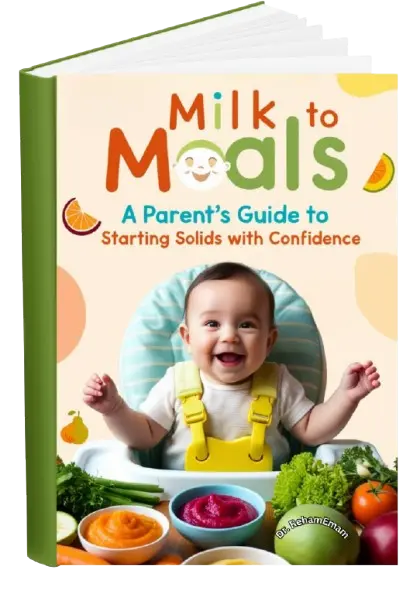
Milk to Meals: A Parent’s Guide to Starting Solids with Confidence
Give your baby the best start with confident feeding. Milk to Meals empowers you to provide healthy, delicious, and enjoyable first foods. Order your copy today! [Link to Purchase]
Leave a Reply
You must be logged in to post a comment.